


“IMAGINE being sent away at 19-years-old and being invited with an old school friend to live in an Atlantic seaside cottage, by a legendary folk singer and seaweed-trawling giant of a man whose wife has just gone to England, leaving him and their eight kids in their cottage behind.”
So goes the premise of an intriguing new novel from one of the region’s most promising novelists.
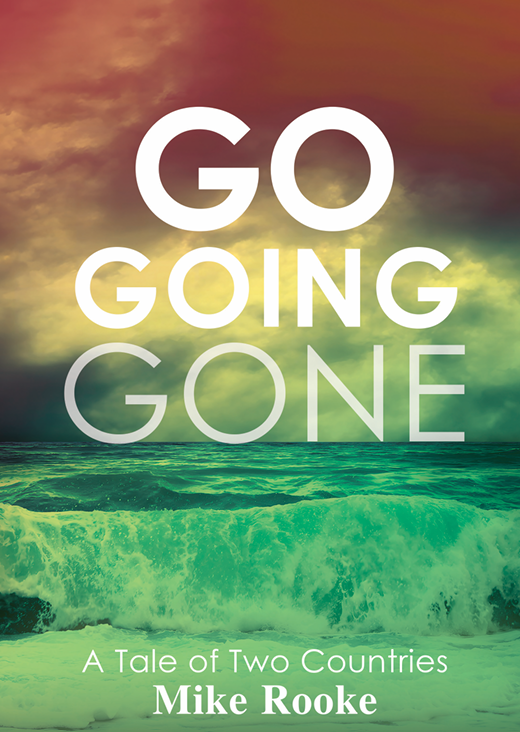
Go, Going, Gone: A Tale of Two Countries follows a young Englishman’s rite of passage on a journey out west – and pens a delicate love letter to both Ireland and Mossley along the way.
It’s a story from ex-Tameside teacher Mike Rooke that is decades in the making.
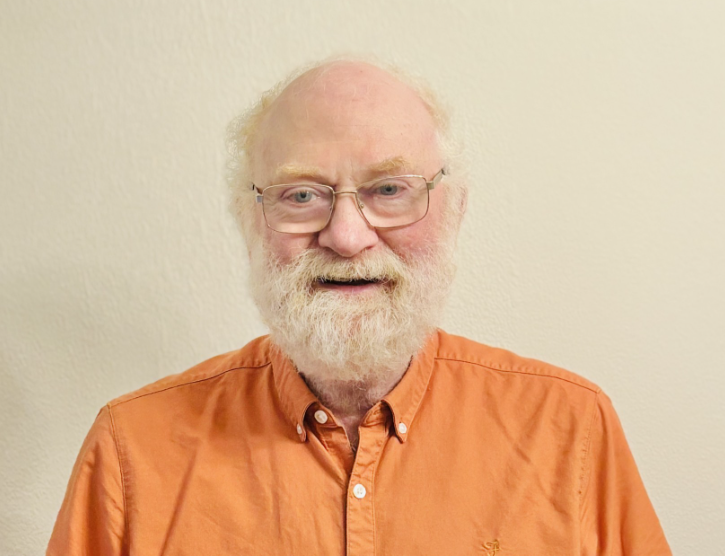
Formerly head of drama at Mossley Hollins High School, he has been writing for more than 40 years – always inspired, he says, by the “creative atmosphere” of Tameside.
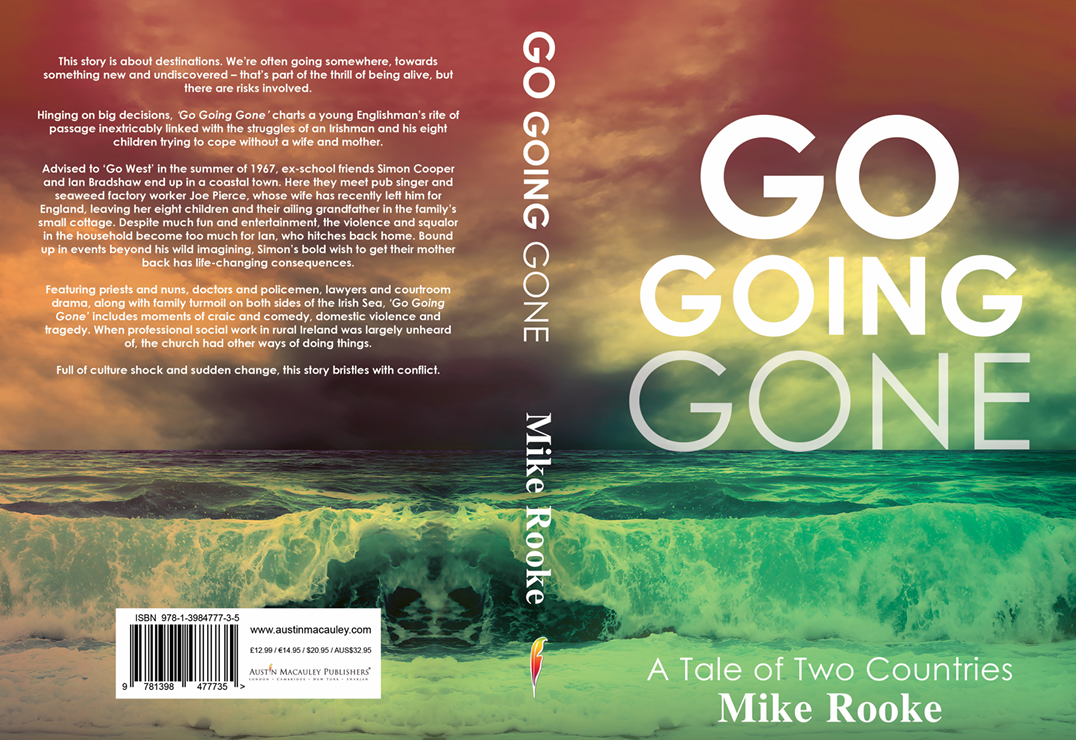
Having been advised to ‘Go West’ during the summer of 1967, ex-school pals Simon and Ian wind up in a coastal town in the Irish west, where they meet pub singer and seaweed trawler Joe, whose wife left the family for England.
As the headrush of adventure fades to the realities of domestic violence and poverty, Ian soon finds himself packing up – leaving Simon behind in the wreckage. Alongside 12-year-old Colleen, Simon’s bold wish to get their mother back soon has life-changing consequences.
“What was planned as a hippy-type holiday becomes not quite a nightmare, but a culture shock,” says Mike. “It completely transforms the lives of these two public school boys and their friends, and transforms the entire family.”
It was a story borne of a lifelong fascination with Ireland, and had first been drafted several decades ago, itself transforming time and time again as he wrestled the sensitivities of Irish history.
“There’s been massive social change in Ireland,” he added.
“There are no longer big families because of a lack of contraception, the church no longer has the same hold on the public, education has become much more secular, they’ve been freed from all that stuff.
“But at the time where this is written, they were still back in that patriarchal arc governing their lives. Not only was I writing about real people and their real lives, but some of those people’s lives are still affected by those memories.”
Mike is talking, of course, of the powerful role played by the Catholic church across Irish society and the sudden shifts in religious influence brought about in the 1960s.
In the decade before, more than 400,000 people left the Republic, leading to a nationwide pressure to keep the economy on its feet.
Under the rule of the church, people were barred from divorcing. Contraception was banned, as was abortion, and conversations around domestic abuse had only recently started becoming mainstream.
During this time, the number of Irish people who identified as Atheists increased by more than 600 per cent. With the threat of the Troubles leering around the corner, those who refused to answer questions on religion increased by 729 per cent.
It was over the next three decades that the church’s influence over the state would begin to wane.
“We’re still hung up about when state authorities should intervene,” Mike told The Correspondent. “In the case of the west of Ireland in 1967, it was still the church who had the most authority.
“I’ve got a lot of time and respect for people who have deep and sincere Christian faith, and any other spiritual faith, but the practices and hypocrisies of some church leaders still appal me. This book is about compassion, and the need to intervene when people need help.
“Since the age of thirteen, I’d always been rebellious about such things. In a way, there’s those threads going on about faith – it’s a thing that might occur to a lot of people, that the book is quite a bit about faith, or lack of it. But it’s not overt at all. It’s a thread.”
But despite its tones of tragedy, violence, and of generational conflict, Mike insists his book still has room for sunshine.
He continued: “I’m confident that this is a really accessible story. It’s not a difficult read at all. It’s not one of these literary novels that puts itself up high and wins a Booker Prize because it’s unreadable to the average person.
“This is a book that speaks from the heart and speaks directly to people – there’s plenty of comedy and good craic, too.”
He now hopes the release of his book will shine a new light on an under-discussed part of Irish history – particularly for the people of Mossley, where sections of the book are based.
He said: “The base of the stuff is in Mossley, although it includes the library and walking by the canal and various things, and it’s set in New Earth Street. It’s symbolic.
“A lot of Irish people moved to Mossley over the years, and of course Catholicism is quite strong now – or certainly lingering. There’s still that feature in Mossley, and I was well aware of that when I chose to transpose that part of the story.
“I don’t want people to feel like I’ve exploited them with this book. I still go to Ireland and I get on really well with Irish people.
“Apart from being a good story full of social and cultural issues, this book is a cultural celebration of the west of Ireland and its people. In a strange kind of way, I’m in love with the Irish. Let’s hope after writing this novel, this love is still reciprocal.”
Go, Going, Gone: A Tale of Two Countries is released on Friday, June 19.