


 From West End wonders to CGI concerts and drone-filled cruise ship spectacles, Ian Cheeseman explores how purpose-built venues and boundary-pushing tech are transforming the way we experience live performance.
Everyone knows what a theatre looks like, don’t they? A stage, a curtain, wings and banks of seats facing the performance area. The more sophisticated theatres are able to have areas that spin, the capability to raise and drop huge props and backdrops. There are big theatres and small theatres, some have circles and even grand circles. I love them all.
As the audience, we watch what happens in front of us, a bit like when we watch TV, a film at the cinema or even a sporting event when sat in the stands. There are moments in theatre where we are wowed, like when the chandelier falls in Phantom of the Opera, Mary Poppins flies over the audience or Marty and the Doc are suspended over the first 10 rows of the stalls, in the DeLorean. Those are jaw dropping moments that push the boundaries.
Although the West End and Broadway have long running shows that stay in place for months or even years, most venues are unable to encompass new, more interactive ideas. Lion King has animals marching down the aisles. Newsies and Starlight Express, at the Troubadour Theatre at Wembley, certainly push the envelope, using gantries and walkways throughout the venue, to the full, to surround the audience with performance.
The Piccadilly Theatre in London’s West End has embraced the residency of Moulin Rouge brilliantly with the seats close to the stage designed to look like the French nightclub and a huge windmill and elephant built into the walls. Even the ambient lighting, which is red, allows you to feel fully immersed in the World of Moulin Rouge.
A few years ago, I saw Celine Dion in Las Vegas. She performed for five years at the Colosseum, Caesars Palace, a venue that was designed for her show. While I wouldn’t describe the venue as immersive, it showed me the advantage of a purpose-built venue. The stage was huge with a video wall that wrapped around it. It lifted the show from excellent to brilliant.

The Abba Voyage show, at the purpose-built Abba Arena in East London, is a perfect example of another step forward in immersive theatre, even though the performers are only there in CGI. It’s Abba in concert. They sing on stage but there are also moments when they are projected on huge screens and the lighting, which sees projectors located all over the audience, create very special effects. Mamma Mia the Party at a purpose built restaurant at the O2 is fully immersive. The performance takes place all around you as you enjoy a Greek meal.
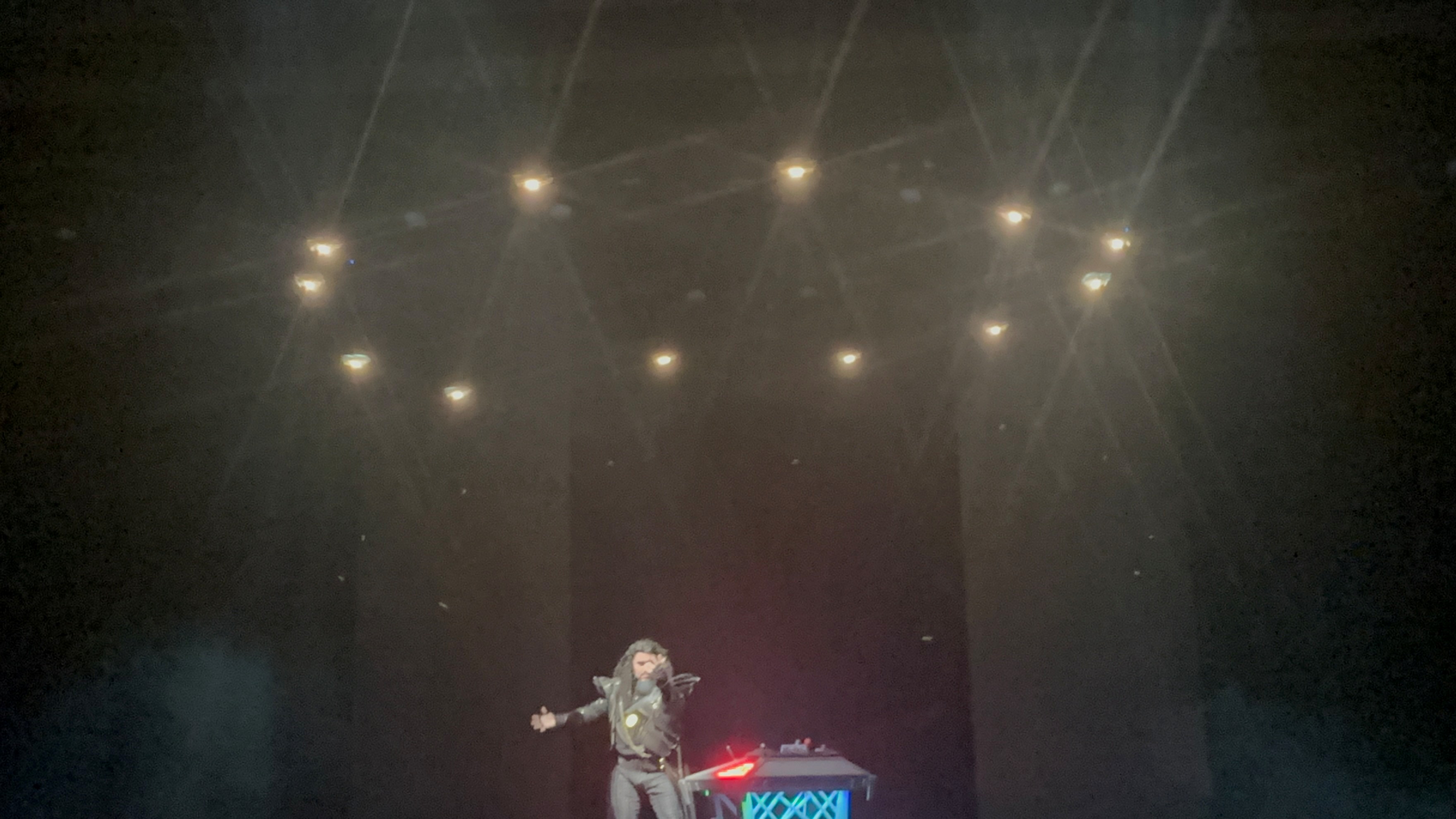
I recently returned from my first cruise on a Royal Caribbean ship, Odyssey of the Seas, and I saw two shows that blew me away. The Effectors, a superhero mini musical, was very good but what made it unique, from my point of view, was when 45 drones flew out over the audience. This was only possible using a bespoke system built into the theatre to help navigate them. The stunningly lit drones created a huge wow factor.
The following night we saw a show called The Book. The venue it performed in was about as immersive as it gets. There were acrobats dropping from the ceiling all around us. Three huge books opened up to reveal cast members and there were moveable multi-screens that revolved and adapted to for many uses. The show would have been great without the immersive nature of the theatre, but the extras lifted it to another level. I felt like I was witnessing the future of theatre. Will there be more purpose-built theatres in the future?
The cost will restrict those possibilities of course but I look forward to seeing what the future holds.