


IT IS a subject that has caused so many neighbourly disputes, been the source of social media clips and even ended up in court.
Now, Denton firm Classic Stone Driveways gives a proper explanation of what can and cannot be done when it comes to yours.
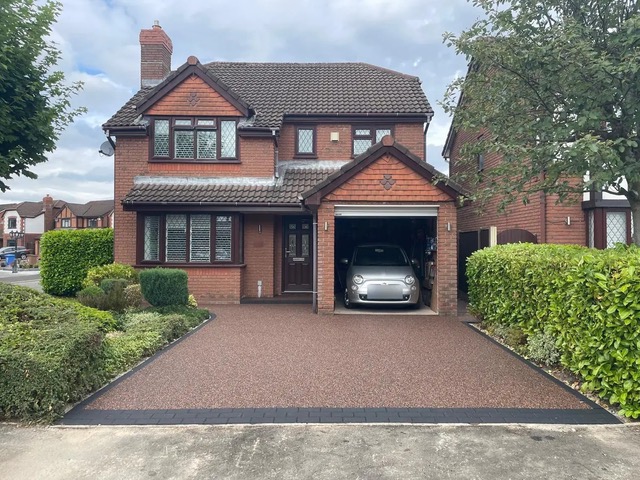
You could gravel your whole front garden without asking anyone. Lay ordinary concrete over more than five square metres of it, less than half a parking space, and you might need planning permission.
Ask anyone in Tameside whether a new driveway needs planning permission and you will usually hear the same answer – it depends how big it is. Pave a corner of the front garden and you are fine. Pave the lot and you had better ask the council.
It sounds like common sense. It is also wrong.
You could cover your entire front garden in gravel, from the front door to the pavement, and in most streets you wouldn’t need permission at all. Lay ordinary concrete over more than five square metres, less than half a parking space, and you might.
It’s about the rain
The rule dates from October 2008.
A few months earlier, the government’s review of the 2007 summer floods, when some 55,000 properties were flooded, had recommended stopping householders from paving over front gardens with surfaces that water cannot get through.
Rain that soaks into a garden stays out of the drains; rain that runs off a concrete drive goes straight into them.
So the law now asks one question about your front garden, the ground between the house and the road: can the rain get through?
If it can, as with gravel, permeable block paving or resin-bound stone, size doesn’t matter.
If it cannot, as with ordinary concrete or sealed Tarmac, anything over five square metres needs permission, unless the water is directed to a lawn, border or soakaway inside your own boundary.
Tameside Council’s own guidance says the same: if a driveway is made of a porous material such as gravel, or the water drains within the property, planning permission is not required.

Separately, councils have powers under the Highways Act to make householders stop water running off their property onto the pavement.
Two things that override it all
The first is an Article 4 Direction, which removes these rights across a defined area, usually a conservation area.
Where one covers driveways, you need permission whatever the surface and whatever the size. Classic Stone’s guide found that none of Tameside’s three Article 4 Directions covers driveways, but it is always worth checking with the council before work starts.
The second is the dropped kerb. Lowering the kerb so you can drive across the pavement is a separate application to the council’s highways team, and nobody has an automatic right to one.
The council decides and it can say no for reasons that have nothing to do with the driveway itself. In Tameside, a crossing on to a main or classified road needs planning permission too.
Classic Stone Driveways, a resin driveway specialist based in Denton, has published a free guide setting out the rules in all 10 Greater Manchester boroughs.
The firm has been laying resin-bound surfaces across the region since 2013 and holds a 5.0 rating from more than 500 Google reviews.
“Nearly everyone who asks us for a quote asks about planning permission, and they almost always think it’s about size,” said Warren Gee of Classic Stone Driveways.
“It isn’t. It’s about where the rain goes. Once people know that, the choice of surface usually makes itself.”
The borough-by-borough guide is at https://classicstonedriveways.co.uk/do-you-need-planning-permission-for-driveway-manchester/