


PATIENTS visiting Tameside Hospital are now being encouraged to think twice before throwing away old inhalers, as part of a new effort to reduce environmental harm.
Specially designed disposal bins have been installed across the hospital site in Ashton-under-Lyne, giving people a safer and more sustainable way to get rid of used or expired inhalers.
The bins can be found at five locations across the site, including outpatient areas in the Hartshead Building and Ward 40 in the Ladysmith Building, where respiratory patients are treated.
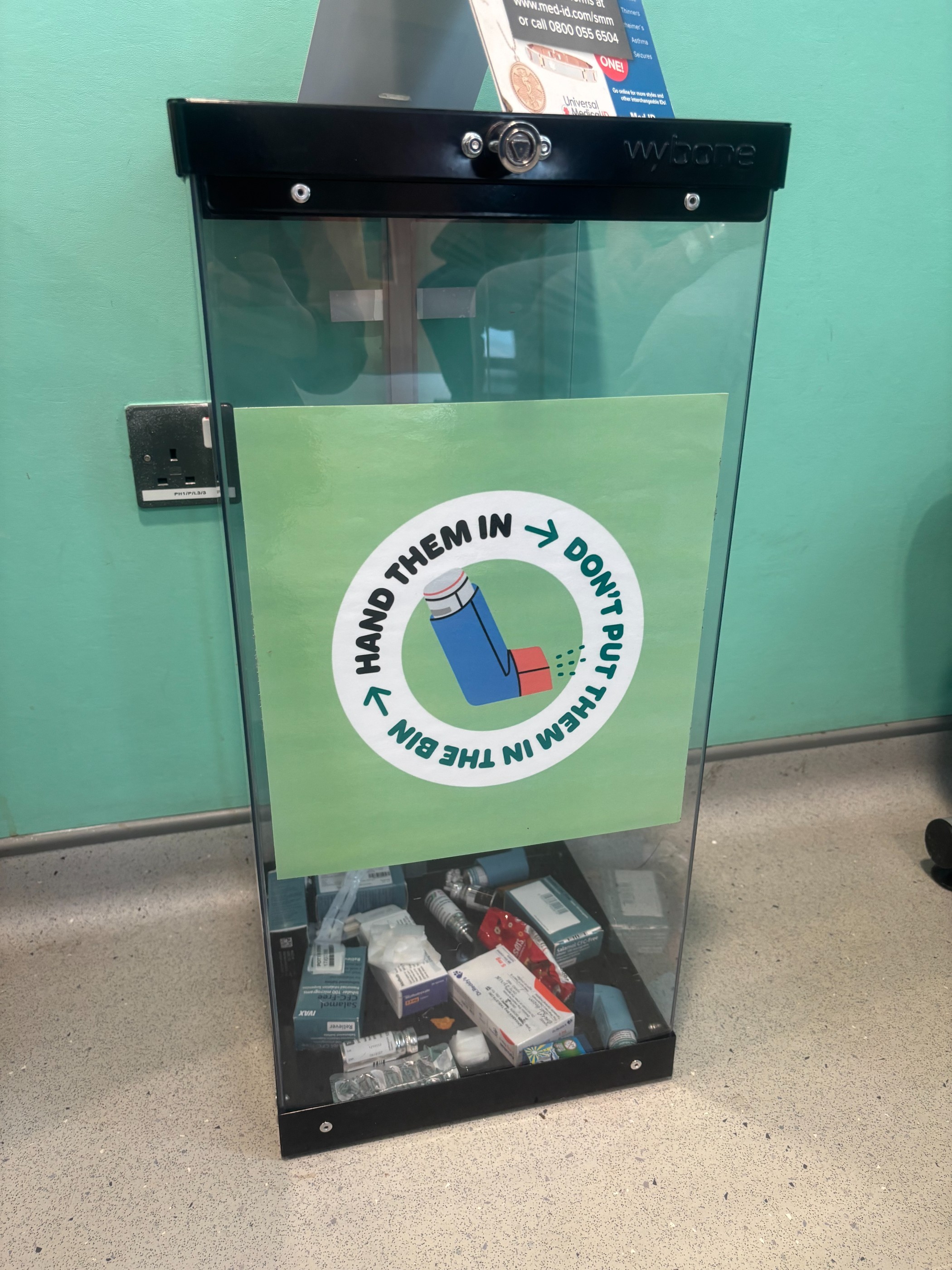
Inhalers are essential for managing conditions like asthma, but some types contain propellant gases that contribute to climate change. Even when the medicine inside has run out, these gases can remain – meaning they shouldn’t be thrown away with normal household waste.
Instead, returning them to a pharmacy or hospital allows them to be disposed of properly. At Tameside Hospital, collected inhalers will be incinerated in a controlled way, helping to break down the leftover gases and reduce their impact on the atmosphere.
The bins themselves were provided by Veolia, a firm specialising in waste and environmental management.
Healthcare staff say awareness is still a key issue.
Nicole Turner, Specialist Pharmacy Technician in Paediatric Asthma, said “People often don’t realise that inhalers shouldn’t go in normal household waste. Returning them to the hospital means we can dispose of them safely, protect the environment, and make sure patients stay informed about the best way to manage their respiratory care.”
The initiative also ties into wider efforts to make healthcare more sustainable.
Hannah Low, Sustainability Officer, said “Small actions add up. By diverting used inhalers from general waste, we’re preventing harmful greenhouse gases from entering the atmosphere and supporting our wider commitment to reduce Tameside Hospital’s carbon footprint as part of our Joint Green Plan.”