


A TAMESIDE company will soon be bringing a new thriller that puts a fresh twist on the grind of modern working life to film festivals across the country and beyond.
Prickle Productions is preparing for a festival run of its latest independent film GUM – a debut thriller by Oldham writer and director Carol Fitzgerald.
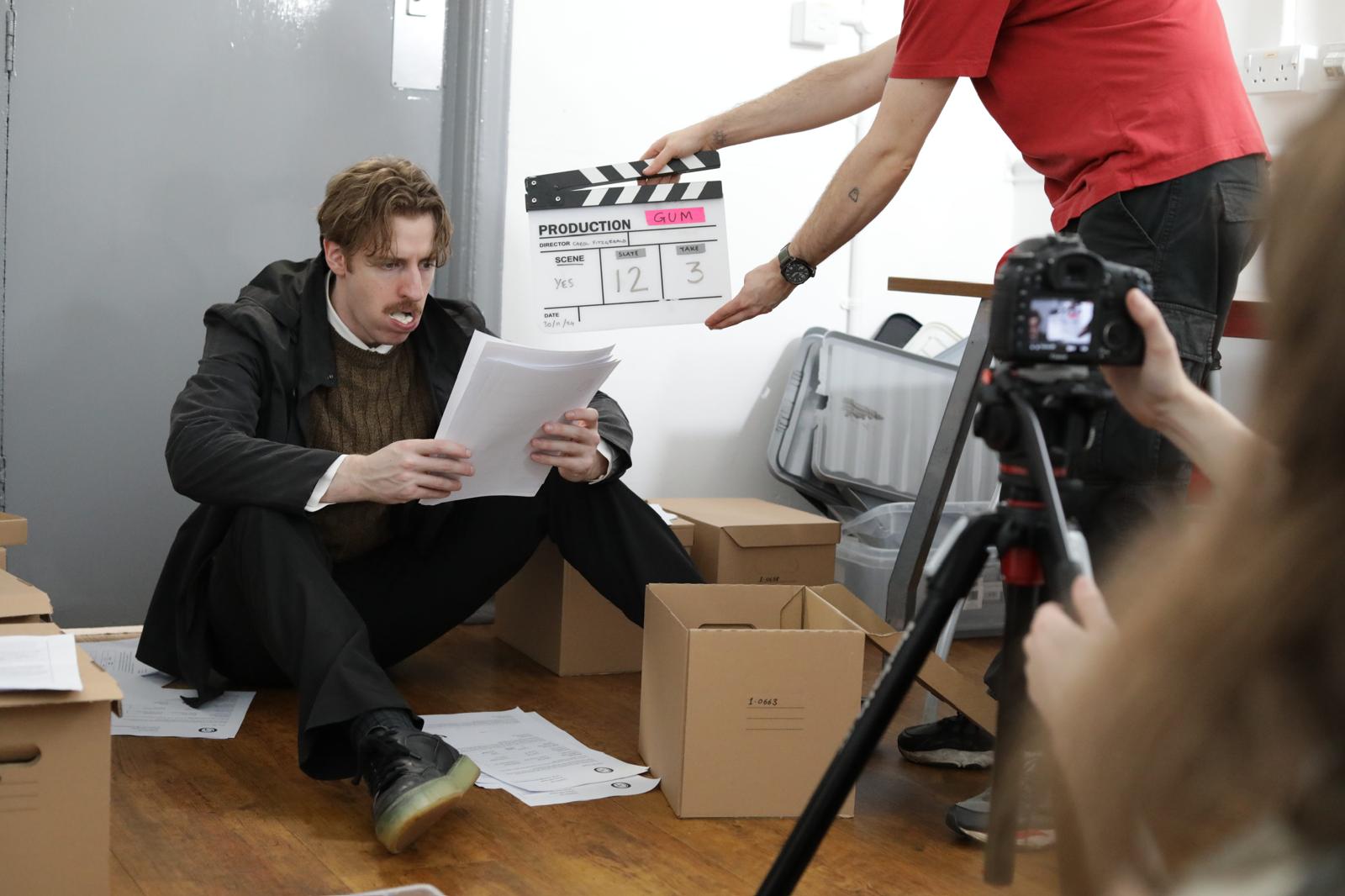
Shot in Manchester in December 2024, the film blends psychological tension with workplace satire, following one man’s descent into chaos as he chews on more than he can handle.

The story follows Nate, played by Gwion Wyn, a desperate officer worker racing to recover a lost file that could save his job.
As pressure mounts, Nate turns to an addictive chewing gum that transforms everyday sounds into ticking bombs – a sensory nightmare that blurs the line between survival and self-destruction.
Constructed by an experienced team of local filmmakers, GUM captures both the anxiety and absurdity of life under the corporate microscope.
The film’s cinematography is led by Max Macmillan – best known to many as Timothy Turner from the BBC’s Call the Midwife.
Producer Thomas Jackson, founder of Prickle Productions, says the film speaks to a universal modern dread.
“GUM shows us what happens when profit comes before people, something that’s become a common story within today’s work culture,” he said.
“It’s about the hidden cost of survival in systems that treat workers as disposable.”
Carol Fitzgerald, who hails from Chadderton, draws from personal experience in crafting her tense, surreal narrative.

A graduate from the University of Salford’s MA Film Production programme, she has worked on a range of projects, including Autumn (directed by Max Macmillan) and The Estrogen Gospel, which screened at Soho Horror Festival and Final Girls Berlin.
The spark for GUM, she says, came from her own time juggling customer service jobs and studies – with a half-chewed pack of Juicy Fruit nearby.
Founded in 2023 by Thomas Jackson alongside Martina Majcen and Ash Birks, Prickle Productions is committed to “amplifying working-class voices in independent cinema”.