


IT is a centenary that has gone unnoticed at Stalybridge Celtic: 100 years since they were elected as a member club of the Football League.
Celtic created history in 1921-22 season when they became founder members of Third Division North – before then there were only two tiers in English football.
And though Celtic spent only two seasons in the Football League – they finished a creditable seventh and 11th respectively – it was not the lack of playing success, but financial strain that forced their voluntary resignation.
Those heady days as a Football League club are a contrast to the club’s fortunes today as it plays in the seventh tier of the pyramid.
Celtic, formed as an amateur club in 1909, certainly enjoyed a meteoric rise to become a Football League club in the space of 12 eventful years.

And bearing in mind the effective loss of four years due to the First World War, it was an even more remarkable journey.
Initially they played as amateurs in the Lancashire and Cheshire League but after only two season embraced professionalism to join the Lancashire Combination.
Celtic won the division two title in their debut season in 1911-12 and they then became one of four clubs – along with Bradford City, Barnsley and Rochdale – to join the expanded Central League which was for reserve teams.
They were elected, however, on the understanding that Celtic would field their first team while their reserves would compete in division two of the Lancashire Combination.
They finished fifth in their debut Central League campaign before a surprise move to the Southern League, division two for 1914-15.
This was the most prestigious non-league competition and considered the most viable route to the Football League with Celtic finishing runners-up to Stoke City in their only season as members.
As football resumed after the hostilities, Celtic quit the Southern League on financial grounds and reverted back to the Central League.
Two years later and Celtic, despite finishing a lowly 13th in the Central League, became founder members of Third Division North.
Despite fears about the considerable expense, the directors pledged to field a first-class side and to be competitive which is what they achieved.
And their Football League debut on August 27, 1921 was memorable as 6,000 fans witnessed a 6-0 home win against Chesterfield, Jimmy Thompson scoring a hat-trick and Charlie Petrie getting two.
Ironically in the return at Saltergate one week later, Chesterfield avenged the heavy defeat with a 4-0 victory.
And not long after, Celtic lost 4-1 at Tranmere Rovers and seven days later won the return 4-0 and similarly later in the season beat Accrington Stanley 3-1 at home only one week later to lose the return 4-1.The team was managed by John Johnston, a Scot who was a member of Bury’s FA Cup winning team of 1903.
Johnston had initially joined Celtic in 1911 as player-manager, a move that coincided with their decision to embrace professionalism.
They finished seventh in their debut season which was even more creditable bearing in mind they sold two of their best players in early 1922.

Petrie, who finished top scorer in their debut season in the Football League with 17 goals, was transferred to Sheffield Wednesday for £1,300 in the February followed by future England international Maurice Webster to Middlesbrough for £1,500 the following month.
The 1922-23 season, in which Celtic were 11th, was memorable for reaching the first round of the FA Cup when they had a goalless draw at First Division West Brom in front of a crowd of 24,182 at The Hawthorns before losing the replay 2-0 at Bower Fold before a crowd of 9,753 and considerable gate receipts of £550.
But set against a backdrop of increasing financial pressures – gates fell away to about 1,500 – a meeting was held at Stalybridge Town Hall to discuss the club remaining members of the Football League.
The 1,200 who attended the meeting were told £2,000 was needed immediately to pay the summer wages and sign players for the next season and about £2,000 needed each year thereafter in addition to gate money.
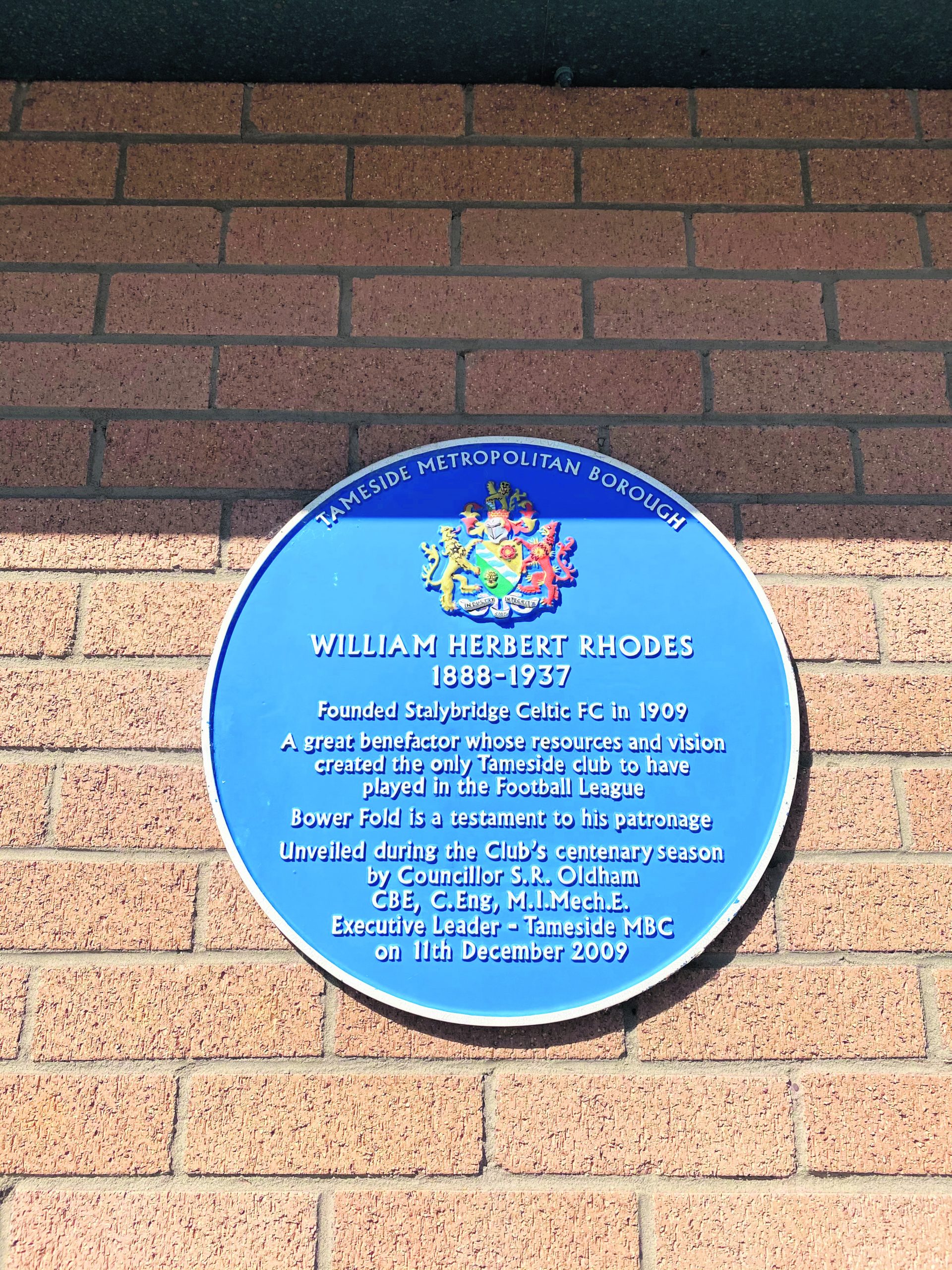
Club founder Herbert Rhodes had bankrolled the club to get it into the Football League, but it had reached the stage when it needed to support itself.
A proposal to form a limited company received little support at the meeting and the formation of a supporters’ committee was also discussed.
But when it became clear that raising £2,000 quickly would not happen, the decision was taken to resign from the Football League.
Their final match was a 2-1 loss at Halifax Town on May 5, 1923 with Joe Fryer scoring their last goal in the Football League.
They were handicapped when centre half Herbert Tyler missed a train to the game and they were also without Billy Dennis because of a ‘cricket engagement’ according to a match report.
Dennis, who was born in Mossley, played Minor Counties for Cheshire and had spells as professional at Milnrow and Elland.
That came one week after their last-ever home game in Third Division North, a 4-3 victory against Halifax Town, Fryer scoring twice.
There was disappointment but a realism because of the financial situation as they joined the Cheshire League of which local clubs Ashton National, Hurst and Mossley were members.
Author Garth Dykes wrote an informative book ‘Stalybridge Celtic: In The Football League’ (SoccerData Publications, £10) in which he charts those two seasons and also the journey from the club’s formation.
Garth produced biographies of the 43 players who featured in those two Football League seasons who included one-armed postman James Harrop who had been badly injured fighting in the First World War, Jewish joiner Monty Saul, draughtsman Ernest Thornley, inside right William Young who was convert from rugby league and full back Jack Holt who had the nickname ‘Dreadnought’.
During their period in Third Division North, Celtic had a record gate of 12,000 at Bower Fold, though ironically it was not for one of their games, but for a women’s match as Dick, Kerr’s Ladies, a legendary team at the time, defeated Rest of Lancashire Ladies 10-0 in an exhibition match.